

Hey there, welding enthusiasts! As a supplier of Pro Welding Benches, I often get asked about the noise level when using these bad boys. So, I thought I'd sit down and write a blog post to give you the lowdown on what you can expect.
First off, let's talk about what causes noise during welding. When you're welding, you're essentially melting metal together using a high - intensity arc. This arc creates a lot of energy, and part of that energy is released in the form of sound. The main factors that contribute to the noise level include the type of welding process, the power settings of your welding machine, and the materials you're working with.
Types of Welding Processes and Their Noise Levels
MIG Welding
MIG (Metal Inert Gas) welding is one of the most popular welding processes out there. It's relatively easy to learn and can be used on a variety of metals. When it comes to noise, MIG welding is generally on the quieter side. The noise level during MIG welding typically ranges from about 70 - 80 decibels (dB). To put that in perspective, 70 dB is about as loud as a vacuum cleaner. This relatively low noise level makes MIG welding a great option for home workshops or small - scale welding operations where noise might be a concern.
TIG Welding
TIG (Tungsten Inert Gas) welding is known for its precision and high - quality welds. It's a bit more difficult to master than MIG welding but produces excellent results. The noise level during TIG welding is also relatively low, usually in the range of 65 - 75 dB. This makes it even quieter than MIG welding in most cases. TIG welding is like a whisper in the welding world, great for those who want a quieter working environment without sacrificing weld quality.
Stick Welding
Stick welding, or Shielded Metal Arc Welding (SMAW), is a more traditional welding process. It uses a consumable electrode covered in flux to create the weld. Stick welding can be a bit noisier than MIG or TIG welding. The noise level usually falls between 80 - 90 dB. At 90 dB, it's about as loud as a lawnmower. So, if you're using a Pro Welding Bench for stick welding, you might want to consider wearing some ear protection.
Impact of Power Settings on Noise
The power settings of your welding machine also play a big role in the noise level. Generally speaking, the higher the power setting, the louder the welding process will be. When you crank up the power to weld thicker materials, the arc becomes more intense, and more energy is released as sound.
For example, if you're using a MIG welder on a low - power setting to weld thin sheets of metal, you might only hear a gentle hum. But if you switch to a high - power setting to weld a thick piece of steel, the noise level can increase significantly. So, it's important to adjust your power settings according to the job at hand, not only for the quality of the weld but also to keep the noise under control.

Materials and Noise
The type of materials you're welding can also affect the noise level. Different metals have different melting points and electrical conductivity, which can influence the behavior of the welding arc. For instance, welding aluminum can be a bit noisier than welding steel. Aluminum has a lower melting point and higher thermal conductivity, which means the arc can be more unstable and produce more noise.
Our Pro Welding Benches and Noise Reduction
At our company, we understand that noise can be a real issue in a welding workshop. That's why our Pro Welding Benches are designed with noise reduction in mind. The benches are made from high - quality materials that help to dampen vibrations, which in turn reduces the amount of noise generated during the welding process.
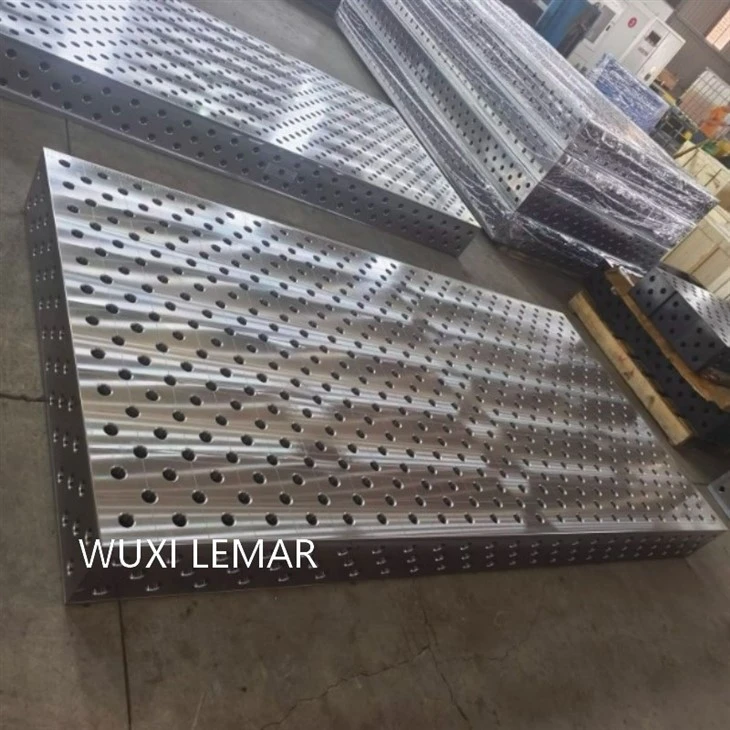
We offer a range of different Pro Welding Benches to suit your needs. Whether you're looking for a Modular Fixture Welding Tables, a 5/8 Welding Fixtures Tables, a D16 Welding Fixture Table, a Heavy - Duty Steel 3D Welding Table, or a CE - certified Welding Table, we've got you covered.
Tips to Further Reduce Noise
Even with our noise - reducing Pro Welding Benches, there are still some things you can do to keep the noise down in your workshop. Here are a few tips:
Use Ear Protection
This is a no - brainer. Whether it's earplugs or earmuffs, wearing ear protection is the easiest way to protect your hearing from the loud noise of welding. There are many different types of ear protection available on the market, so you can choose the one that's most comfortable for you.
Enclose Your Workspace
If possible, enclose your welding area with sound - absorbing materials. This can help to contain the noise and prevent it from spreading throughout your workshop. You can use materials like acoustic panels or even thick curtains to create a makeshift soundproof booth.
Regular Maintenance
Make sure your welding machine and Pro Welding Bench are properly maintained. A well - maintained machine will operate more smoothly and produce less noise. Check for loose parts, clean the contacts, and lubricate any moving parts regularly.
Final Thoughts and Call to Action
In conclusion, the noise level when using a Pro Welding Bench depends on several factors, including the welding process, power settings, and materials. But with our high - quality Pro Welding Benches and some simple noise - reduction techniques, you can keep the noise under control and enjoy a more comfortable working environment.
If you're interested in purchasing a Pro Welding Bench for your workshop, or if you have any questions about our products, feel free to reach out to us. We're here to help you find the perfect welding solution for your needs. Don't miss out on the opportunity to upgrade your welding setup with our top - of - the - line Pro Welding Benches.