


Welder
Wuxi Lemar Machinery Equipments Co.,Ltd is a high-tech enterprise specializing in automated welding equipment and H-shaped steel equipment.We have many years of production experience in the automatic welding industry and CNC plasma cutting industry.
Our products are widely used in pressure vessels, petrochemicals, power stations, heavy machinery, ships, steel structure construction and other industries.
In addition to production and sales, Wuxi Lemar has established a special one-stop service for H beam, Pipe and Flange automatic welding production lines and accessories and maintenance of CNC plasma cutting machines.
Why Choose Us
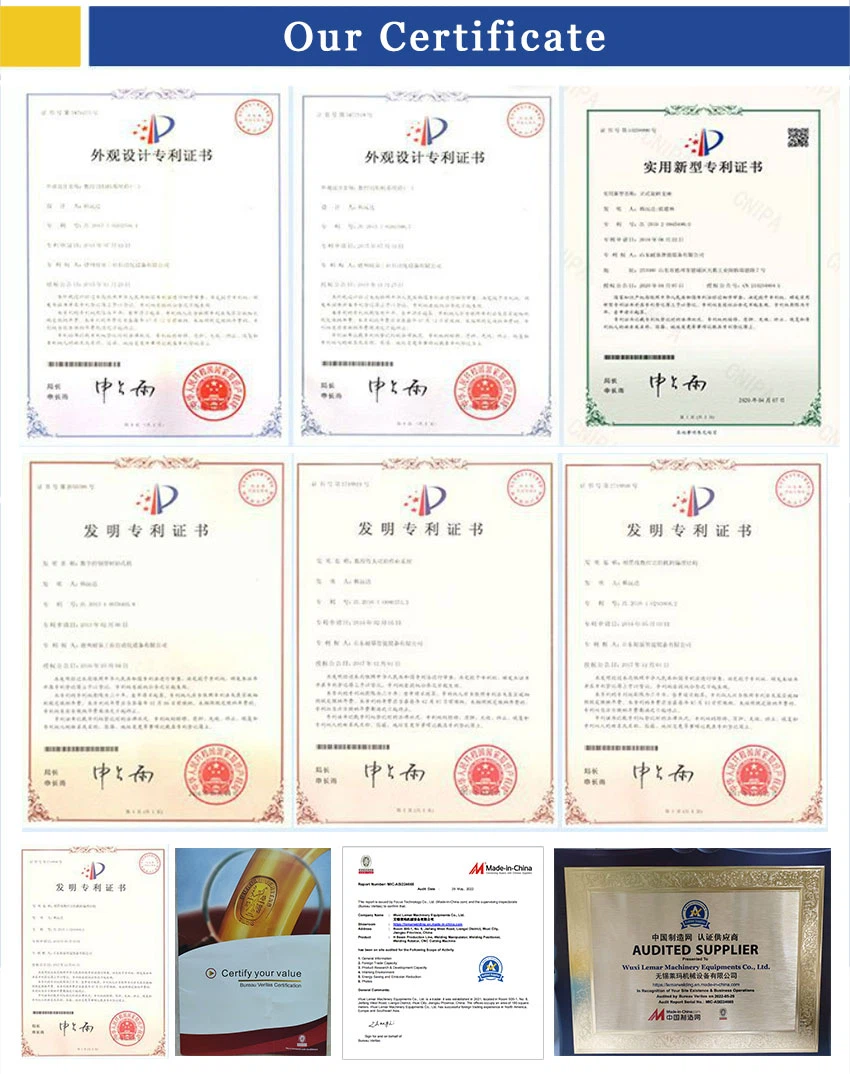
Our Certificate
We have passed the ISO CE SGS testing standard, besides, our machine have honor to won many patents, like H-beam manufacturing equipment patents, fuel tank in wall clean machine patents and etc.
Advanced Equipment
We also use advanced equipment. Which allow us to working by a high precision and to manufacture the customized machines according your requires.
Professional Team
Our professionally foreigner-sales team is on hand to assure the quality and effectiveness of your machine purchase. We will attend and manage your orders and enquiries very carefully to assist you to choosing the best machine to fit your needs and also to help you to save more during your business.
Rich Experience
Our company has many years of production work experience. The concept of customer-oriented and win-win cooperation makes the company more mature and stronger.
-
![Inverter DC Submerged Arc Welding Machine]() Inverter DC Submerged Arc Welding MachineModel:MZ1000/1250read more
Inverter DC Submerged Arc Welding MachineModel:MZ1000/1250read more
Origin:Jiangsu China
Brand:Lemar
MOQ:1pcs
Color:Blue
Usage:Suitable for welding medium and thick plate structures -
![DC Inverter Welding Machine]() DC Inverter Welding MachineVoltage: single phase AC220V 50HZ / 60HZread more
DC Inverter Welding MachineVoltage: single phase AC220V 50HZ / 60HZread more
Motor: DC permanent magnet
Speed: 1200 rpm
Wire disk size: 305 mm -
![Insert Gas-shielded Welding]() Insert Gas-shielded WeldingModel:NBC-350/500/630read more
Insert Gas-shielded WeldingModel:NBC-350/500/630read more
Welding method:Gas shielded welding
Wire length:5m/10m
Drive mode:Manual/Auto
Input voltage:380V
Power:17.5kw
Efficiency:90% -
![Automatic Submerged Arc Welding Machine]() Automatic Submerged Arc Welding MachineAutomatic Submerged Arc Welding Machine can weld carbon structural steel, low alloy structural steel, stainless steel, heat resistant steel and its composite steel.read more
Automatic Submerged Arc Welding MachineAutomatic Submerged Arc Welding Machine can weld carbon structural steel, low alloy structural steel, stainless steel, heat resistant steel and its composite steel.read more -
![Gas Shielded Welder]() Gas Shielded WelderWelding is initiated by an electric arc between a tungsten electrode and the metal to be joined. The arc melts the metal, whilst shrouding it in a cloud of argon, helium gas or carbon dioxideread more
Gas Shielded WelderWelding is initiated by an electric arc between a tungsten electrode and the metal to be joined. The arc melts the metal, whilst shrouding it in a cloud of argon, helium gas or carbon dioxideread more


A Welder specializes in joining metal parts together using various welding techniques. Welding is a process that involves melting the edges of two or more metal pieces and fusing them together to form a strong and durable bond. Welders work with a wide range of metals, including steel, aluminum, and stainless steel, and they use different methods such as arc welding, gas welding, and resistance welding, among others.
The work of a Welder requires precision, technical knowledge, and the ability to interpret and understand blueprints, drawings, and welding symbols. Welders use specialized tools and equipment, including welding machines, torches, electrodes, filler metals, and protective gear such as helmets and gloves.
Benefits of Welder
Material Preparation: Before welding, welders prepare the materials to be joined. This involves cleaning, cutting, grinding, and shaping metal parts to the specified dimensions using tools such as grinders, shears, and plasma cutters. They also remove rust, paint, or other contaminants that can affect the quality of the weld.
Welding Equipment Setup: Welders are responsible for setting up and maintaining welding equipment and tools. This includes selecting the appropriate welding machine, electrodes, wires, shielding gases, and other consumables required for the specific welding process. They ensure the equipment is calibrated, in good working condition, and follows safety standards.
Quality Control: Welders inspect the completed welds to ensure they meet the required quality standards. They check for defects such as cracks, porosity, incomplete fusion, or excessive spatter. Welders may use visual inspection techniques, non-destructive testing (NDT) methods like ultrasonic testing or X-ray, and destructive testing methods when required.
Work environment: Welder may work indoors or outdoors, depending on the project. Some Welder work in factories, construction sites, or shipyards, while others may work in smaller shops or repair facilities. Welder may work in tight spaces, at heights, or in uncomfortable positions.
Safety concerns: Welder must follow strict safety protocols to protect themselves and others from injury. They must wear protective gear, including helmets, goggles, and gloves, and may work with hazardous materials or in dangerous conditions.
Skills required: Welder need to be skilled at using welding equipment and tools, as well as have knowledge of metal properties, welding techniques, and safety procedures. They must also have good hand-eye coordination and physical dexterity.

Type of Welder
TIG Welding Machine
TIG welding machines, also known as Tungsten Inert Gas welding or Gas Tungsten Arc Welding machines, provide specialized welding that minimizes sparks, splatter, and fumes, for a cleaner, more precise finish. Gas Tungsten arc welding machines (GTAW) can handle various metals, such as nickel alloys, stainless steel, gold, brass, magnesium, aluminum, and copper.
A TIG welding machine is typically used for repairing damaged parts, though not widely used, and is ideal for specialized pieces and objects. TIG welding uses an electric arc process that creates a weld with a tungsten electrode that’s non-consumable.
Stick Welding Machine (Arc Welding Machine)
Manual metal arc welding is performed with a stick welding machine, which is typically used in construction projects that use electrode welding for pipelines and steel in the metal industry. A stick welder offers many advantages that MIG and TIG welding do not provide, as this process can be done in many settings and allows for many weld seams.
The welding power source in stick welding involves contact between a rod electrode and the workpiece, which produces a short circuit between two poles within a fraction of a second, and creates a path for the current, where the arc burns and creates a fusion heat. This type of manual arc welding functions with high amperage and low voltage, making it easier to regulate the power source for various objects and materials.
Multi-Purpose Welding Machine
A multi-purpose welding machine is an efficient way to complete more than one welding job at a time. These machines are commonly used on construction sites or in manufacturing facilities and provide many types of processes, including stick, TIG, MIG, and flux-cored welding processes.
One of the main advantages of these welding machines is their versatility, which allows users to switch power sources and work on different projects, saving significant time and money. Multi-purpose welding machines are lightweight due to advanced technology, which provides the functions of three welders in one, with sufficient power, without taking up lots of space. For this reason, they are highly adaptable for various projects and welding functions.
Inverter Welding Machine
An inverter welding machine is a small, compact machine that is portable and uses solid electronic parts to improve overall efficiency for converting the electric current. These conveniently sized welders often feature digital functions, making arc control easier than a stick welder and other traditional welding machines.
Inverter welders are created with silicon-based technology, which makes them simpler to handle than heavier aluminium or copper transformers, which are familiar with standard welders. Inverter welding technology is highly reliable, portable, and often more cost-effective, especially for smaller projects and objects.

Step 1: Determine The Type Of Metal You Will Be Welding
● Carbon Steel
The majority of welds done involve carbon steel pipe or sheet metal. Carbon steel (or ordinary steel) can handle a lot of heat. So, unlike the other metals listed below, this metal is very forgiving when a novice welder applies too much heat.
● Stainless Steel
Stainless steel (“SS”) is more finicky when it comes to dealing with heat. Composed of steel, chromium, and nickel, manufacturers use this alloy for food/beverage vessels and many other products, largely because of its anti-corrosion properties.
Step 2: Establish A Current Range That Covers All Possible Metal Thicknesses
The thicker the metal, the more current you need to weld a joint with good penetration.
Since the cost of a welding machine is based in part on how much juice it generates, you must determine in advance the maximum thickness of base metals and fixtures you’re going to be working on in your shop.
Step 3: Decide Where You Will Be Welding
The CO2/argon gas used with the MIG process to shield a weld’s molten puddle will get blown away and be ineffective. This problem results in oxidation and porosity in your welds.
In breezy conditions where shielding gas cannot be used, you’ll want to be able to switch a MIG machine over to the flux-cored mode (or use a straight flux-cored welder). The coated wire provides everything you need to make a good weld, including the shielding, so no gas is needed.
Step 4: Understanding Key Features To Compare
An OCV of about 80 volts is considered normal in a welder. In a welder, it can drop to about 35, but it’s not a big deal since, with welding, the arc normally starts without fuss when you pull the trigger.
Step 5: Determine If You Need To Use Compressed Gases
Various gases (CO2, argon, oxygen, etc.) or mixtures of gases are used for different welding processes.
For MIG welds, the type of gas you need depends on the process, the base metal, welding position, and environmental conditions. The gases used include argon, CO2, helium, oxygen, and nitrogen, or blends of these gases. For example, a blend of argon and CO2 is common.
The difference between high current and low current mig welder in application
The main difference between high current and low current MIG welders lies in their amperage output, which affects their suitability for certain welding applications.
High current MIG welders typically have an amperage output of 200 amps or higher and are better suited for welding thicker materials such as structural steel, heavy equipment, and large pipes. They provide deep penetration and can create strong and durable welds on thicker metals. High current MIG welders are commonly used in heavy-duty industrial settings, such as shipbuilding, construction, and manufacturing.
Low current MIG welders, typically have an amperage output of 150 amps or lower and are better suited for welding thinner materials such as sheet metal, aluminum, and stainless steel. They provide more control and precision over the welding process, resulting in cleaner and more aesthetically pleasing welds. Low current MIG welders are commonly used in automotive repair, home improvement, and DIY projects.
Between a high current and low current MIG welder ultimately depends on the specific application and material being welded. Choosing the wrong type of welder can result in poor weld quality or even damage to the metal being welded. Therefore, it's important to consult with a welding professional or refer to the manufacturer's specifications before selecting a MIG welder for a particular job.
High current MIG welders are best suited for heavy-duty industrial applications and thicker metals, while low current MIG welders are best suited for automotive repair, home improvement, and DIY projects involving thinner metals. Understanding the differences between high and low current MIG welders can help ensure the right tool is chosen for the job, resulting in high-quality and durable welds.
Power supply
The power supply is the prime area of any MIG machine as it controls many variables. Some MIG machines that are made to a price have elementary functions and abilities. Many of these machines run at a low maximum amperage output. They have low duty cycles and often use aluminum windings in the power sources.
Torch
The torch is also known as the welding gun. The guns supplied with cheap MIG welders are proprietary to only that particular brand of welding machine. As a result, the MIG torch welding consumables are not typical, and the actual welding torch quality has minimal durability. It can lead to failure.
Welding wire
The welding wire is very critical in the process of welding. It is often challenging to select a good quality MIG welding wire. Cheap cables have a harmful copper coating, and sometimes these wires are sold with rust on them. The tolerance of wire diameter does not remain constant and results in irregular feeding of wire. It eventually will lead to burn backs and require replacing contact tips that cost money. You will then lose the production time as workers are fixing the machine problems all day.
Earth clamp or ground clamp
Welding is merely creating an electrical circuit. A good earth connection is necessary to complete the course. This problem is solved by having an earth clamp that has bright faces of contact. Over time arcs forming on the ground clamp will hinder the machine operation.
Bottom Line
The in-depth detail about the working process is usually found through engineering machines for sale for MIG welding machines. Nevertheless, a welder must keep in mind these basics for a smooth operation.
Tips to Extend the Life of Your Welder
In the world of welding, Welder are the workhorses that transform raw metal into welded masterpieces. They wield tremendous power and precision, bridging gaps and fusing metals with remarkable finesse. However, like any complex machinery, welders require regular maintenance to continue performing at their best.
Maintenance is not merely a mundane task; it's a crucial aspect of responsible welding practices. Neglecting maintenance not only shortens the lifespan of your welding equipment but also poses safety risks. Welders, with their high electrical currents and intense heat, demand careful attention to ensure both longevity and safe operation. Why is it vital to extend the life of your welding machine? The reasons are multifaceted. Firstly, an arc welder is a significant investment, and prolonging its lifespan safeguards your financial resources. By ensuring it remains in optimal working condition, you reduce the need for frequent replacements or costly repairs.
Moreover, a well-maintained welder consistently delivers high-quality welds. In industries where precision and reliability are paramount, such as aerospace, construction, and manufacturing, this is an absolute necessity. The welder's lifespan directly influences the consistency and quality of the welds it produces. Extending the life of your welder is also a commitment to sustainability. By minimizing waste and the disposal of old equipment, you reduce your environmental impact and contribute to a greener future. It's a responsible and eco-friendly approach to welding.
Our Factory
Wuxi Lemar Machinery Equipments Co.,Ltd is a high-tech enterprise specializing in automated welding equipment and H-shaped steel equipment.
We have many years of production experience in the automatic welding industry and CNC plasma cutting industry.

Our Certificate

FAQ
Q: What is being a welder?
Q: What is the difference between a MIG and a TIG welder?
TIG welding, on the other hand, is a manual process that requires more skill and precision. It uses a non-consumable tungsten electrode to generate the weld. TIG welding provides greater control over the weld, resulting in cleaner and higher-quality welds. It's often used for critical joints and thin materials.
Q: What are the common safety precautions when welding?
Q: How do I choose the right welding machine for my needs?
Q: What are the common welding defects and how can I avoid them?
6To avoid these defects, ensure that the work area is clean and free of contaminants. Use the correct filler material and settings for the type of metal and thickness you're welding. Practice good technique and follow the manufacturer's recommendations for maintaining your equipment. Additionally, allow the weld to cool properly before handling or stressing it.
Q: How do I clean and prepare a surface for welding?
Q: What is the definition of welding?
Welding is the process of fusing two or more parts using heat, pressure, or both. It's often done on metal, thermoplastics, and even wood. The resulting joint is known as a weldment, and the conjoined parts are known as the parent material. The material used to create the weldment is called a filler or consumable.
Q: What are the 3 types of welding?
Q: Why is welding so strong?
Welding creates a high-strength joint. Although some structural adhesives are fast catching up, no other joining method can achieve such high strength as welding. This is because the welder melts the two metal surfaces and interlinks the two substrates.
Q: Is welding harder than electrician?
While both welding and electrician work require specific skills, it's challenging to definitively say one is harder than the other. Welding involves working with materials like metal and requires precision in creating strong joints, while electricians focus on electrical systems.
Q: What ae the primary responsibilities of a welder?
Q: What industries commonly employ welders?
Q: What does a welder do?
Q: What are the different types of welding?
Q: What safety precautions should I take when welding?
Q: How do I choose the right welding machine for my needs?
Q: How do I clean and prepare a surface for welding?
Q: What is the importance of ventilation in welding?
Q: How do I troubleshoot common welding problems?
We're well-known as one of the leading welder manufacturers in China for our quality products and good service. Please feel free to buy customized welder made in China here from our factory. For more information, contact us now.
Welding Auxiliary Equipment, Insert Gas shielded Welding, Automatic Submerged Arc Welding Machine