

Surface roughness is a crucial characteristic when it comes to a cast iron welding table. As a seasoned supplier of Cast Iron Welding Tables, understanding the concept of surface roughness and its implications on the welding process is essential. This blog post aims to delve into what surface roughness of a cast iron welding table is and why it matters.
Defining Surface Roughness
Surface roughness refers to the microscopic irregularities on the surface of a material. In the context of a cast iron welding table, these irregularities are a result of the manufacturing process. These irregularities can be visualized as peaks and valleys on the table's surface. Measured in units such as micrometers or micro - inches, surface roughness is a quantitative value that represents the average height of these peaks and valleys.
The Ra value, or arithmetic mean roughness, is commonly used to describe surface roughness. It measures the average deviation of the surface irregularities from the mean line. A lower Ra value indicates a smoother surface, while a higher Ra value means a rougher surface.
The Manufacturing Process and Surface Roughness
The casting process of a cast iron welding table significantly influences its surface roughness. During casting, molten iron is poured into a mold, and as it cools and solidifies, the surface characteristics are formed. Several factors during this process can lead to varying degrees of surface roughness.
The quality of the mold is a critical factor. If the mold has a rough interior surface, it will transfer that roughness to the cast iron welding table. Moreover, the cooling rate of the molten iron also plays a role. A rapid cooling rate can sometimes result in a less uniform surface, increasing the surface roughness. Additionally, impurities in the molten iron can cause uneven solidification and contribute to a rougher surface.

The Implications of Surface Roughness on Welding
Weld Quality
The surface roughness of a cast iron welding table can have a direct impact on the quality of the welds. A rough surface may trap contaminants such as dirt, oil, and rust particles in its valleys. These contaminants can interfere with the welding process, leading to defects in the welds. For example, they can cause porosity in the weld metal, reducing its strength and durability.
On the other hand, a smoother surface is less likely to trap contaminants, providing a cleaner base for welding. This results in better - bonded welds with fewer defects, enhancing the overall quality of the welded parts.
Weldment Placement and Alignment
A smooth surface is essential for accurate placement and alignment of the weldments on the table. When the surface is rough, it can be challenging to position the parts precisely, leading to misalignment during welding. This misalignment can cause stress concentrations in the welded structure, potentially compromising its integrity.
In contrast, a smooth cast iron welding table allows for easy and accurate placement of the weldments, ensuring proper alignment and reducing the risk of structural weaknesses.
Tool and Electrode Performance
The surface roughness can also affect the performance of the welding tools and electrodes. A rough surface can cause increased wear on the tooling, as the peaks and valleys create additional friction. This not only shortens the lifespan of the tools but can also affect the precision of the welding process.
For electrodes, a rough surface may cause inconsistent arcs, as the contact between the electrode and the table is uneven. This can result in poor fusion and a less - than - optimal weld bead appearance.
Controlling Surface Roughness for a Cast Iron Welding Table
As a Cast Iron Welding Table supplier, we take several steps to control the surface roughness of our products. We use high - quality molds with smooth interiors to ensure that the initial surface of the cast iron is as smooth as possible. During the casting process, we carefully monitor the cooling rate to promote uniform solidification.
After the casting is complete, we perform post - processing operations such as machining and grinding. Machining can remove the outermost layer of the cast iron, which may have the most irregularities. Grinding further refines the surface, reducing the surface roughness to the desired level. We also conduct strict quality control checks to ensure that the surface roughness meets the industry standards and our customers' requirements.
Surface Roughness and Compatibility with Accessories
The surface roughness of a cast iron welding table also affects its compatibility with various accessories. For instance, the Universal Angular Locator needs a smooth surface to function accurately. A rough surface can prevent the locator from being positioned precisely, reducing its effectiveness in angular measurements and positioning.
Similarly, the Measuring Tool Rotating Angle Ruler requires a smooth base to rotate smoothly and provide accurate angle readings. If the table surface is too rough, the ruler may not rotate freely, leading to inaccurate measurements.
Recommended Surface Roughness for Different Welding Applications
The ideal surface roughness of a cast iron welding table depends on the specific welding applications. For general welding tasks where high precision is not required, a slightly rougher surface may be acceptable. However, for applications that demand high precision, such as aerospace or automotive welding, a smoother surface is necessary.
For example, in the aerospace industry, where welds must meet strict quality standards, a surface with an Ra value of around 1.6 - 3.2 micrometers is often recommended. This low surface roughness ensures that the welds are of high quality and that the components fit together precisely.
Our Range of Cast Iron Welding Tables with Optimized Surface Roughness
As a supplier, we offer a diverse range of cast iron welding tables with optimized surface roughness for different applications. Our D16 Welding Table With Wheel Legs is designed for ease of mobility and is suitable for various general - purpose welding tasks. The surface roughness of this table is carefully controlled to provide a balance between cost - effectiveness and weld quality.
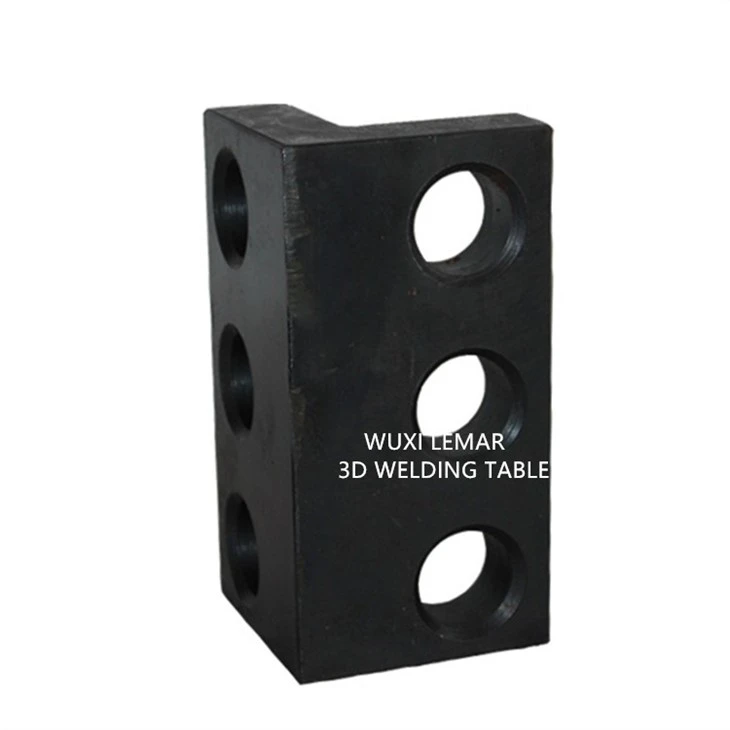
Our Clamping And Locating Angle Bores are also available in combination with our welding tables. These accessories work seamlessly with the tables due to the optimized surface roughness, ensuring accurate clamping and locating of the weldments.
We also offer the Standard Holes Welding Table, which has a precisely machined surface to provide a flat and smooth base for welding. The standard holes on the table allow for easy attachment of various fixtures and accessories, enhancing the versatility of the welding process.
Why Choose Our Cast Iron Welding Tables?
Our commitment to providing high - quality cast iron welding tables with the right surface roughness sets us apart from the competition. We understand the importance of surface roughness in the welding process and take every measure to ensure that our tables meet the highest standards.
Our products are not only designed for optimal performance but also for durability. The cast iron construction of our tables provides excellent stability and resistance to wear and tear. The carefully controlled surface roughness ensures that our tables can be used for a long time without compromising the quality of the welds.
Contact Us for Your Welding Table Needs
If you are looking for a reliable cast iron welding table with the right surface roughness for your welding applications, we encourage you to reach out to us. We have a team of experts who can help you choose the most suitable table and accessories for your specific requirements. Whether you are a small - scale workshop or a large - scale manufacturing facility, we have the products to meet your needs. Contact us today to start a discussion about your welding table procurement.