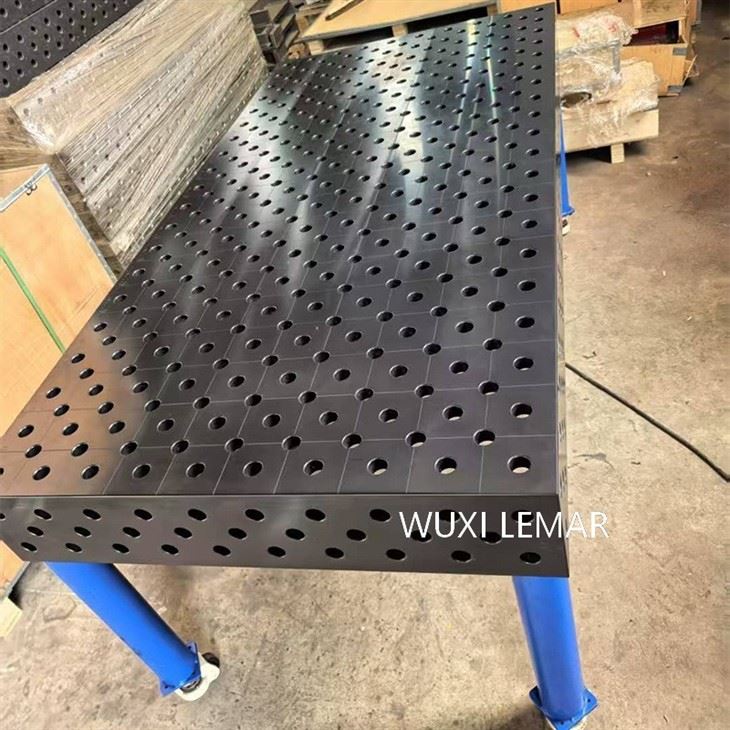
I. Mechanical System Failures
1. Abnormal Positioning Accuracy
Phenomenon: Workpiece repeatability deviation > 0.1mm
Cause: Worn positioning pins, loose module joints, or tabletop deformation
Remedy: Replace the positioning pins (recommended inspection every 6 months) and recalibrate the module gap
2. Motion Jamming
Phenomenon: Difficulty adjusting the hydraulic/worm gear mechanism
Cause: Insufficient lubrication or guide rail contamination
Remedy: Clean the guide rails and apply high-temperature grease (such as Molykote EM-50L)
II. Electrical and Control System Failures
1. TCP (Torch Center Point) Deviation
Phenomenon: The weld deviates from the intended path
Troubleshooting: Use a laser tracker to calibrate the TCP and check the robot's zero position
2. Encoder Signal Loss
Phenomenon: The robot jitters or stops suddenly
Remedy: Check the encoder cable shield and replace the encoder module if necessary
III. Welding Quality Failures
1. Uneven Weld
Cause: Torch angle deviation or insufficient shielding gas flow
Adjust Adjustment: Adjust the welding torch to a 45° angle and check the gas line pressure (must be ≥ 0.5 MPa).
2. Unstable Arc
Cause: Clogged contact nozzle or mismatched wire diameter
Remedy: Replace the contact nozzle (recommended every 500 meters of wire).
IV. Safety and Auxiliary System Failures
1. False Emergency Stop Triggering
Troubleshooting: Check the safety door switch contacts for oxidation, clean, and test.
2. Cooling System Alarm
Remedy: Check the water pump flow rate (must be ≥ 4 L/min) and replace any aging water pipes.