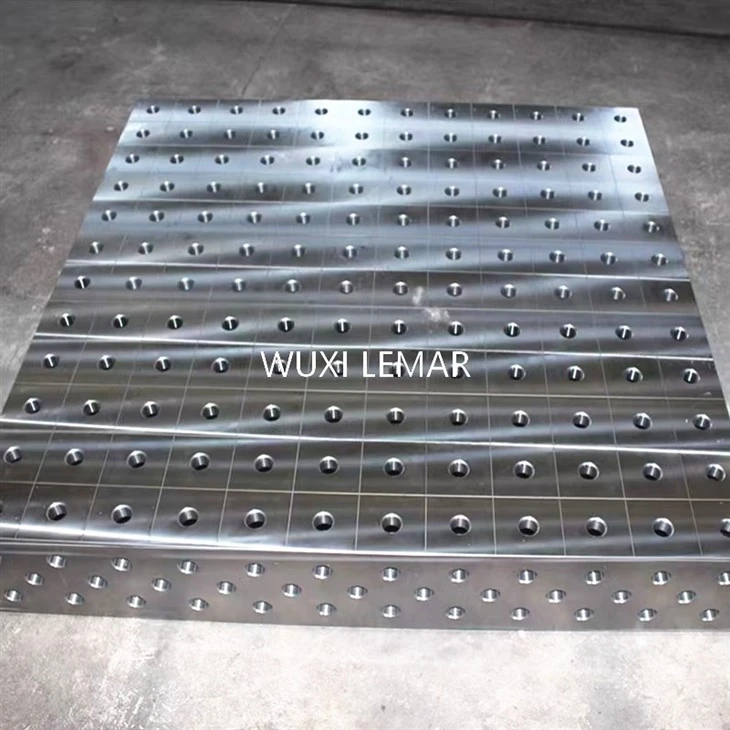
1. Preparation before operation
Environmental inspection: Ensure that the environment around the welding workbench is clean and dry, and there are no flammable or explosive items to avoid fire.
Equipment inspection: Check whether the power cord and grounding wire of the welding workbench are intact and whether the contact points are in good condition.
Personal protection: Operators must wear personal protective equipment such as protective glasses and welding gloves.
2. Operation process
Correct operation: Strictly follow the welding process regulations and monitor the temperature, pressure and other parameters during the welding process.
Avoid dangerous behavior: When welding, hands and body should not touch the conductor of the secondary circuit, such as the live parts of the welding clamp or welding gun.
Equipment maintenance: Regularly maintain and maintain the welding workbench to ensure that the equipment is in good working condition.
3. Post-operation processing
Equipment cleaning: After welding, clean the soldering tip with a moist sponge and apply a thin layer of tin on the surface of the soldering tip.
Turn off the equipment: After welding, adjust the temperature control button of the constant temperature soldering station to the lowest position and turn off the power.
Site cleaning: Properly dispose of remaining solder, slag, etc. to ensure site safety.
4. Safety precautions
Avoid touching high-temperature parts: Do not touch the soldering iron tip and the metal parts near it to prevent burns.
Avoid operating near flammable objects: Do not use the soldering iron tip near flammable objects.
Avoid equipment from getting wet: Do not get the soldering station wet, and do not use or disassemble the soldering station when your hands are wet.
Avoid unauthorized modification of equipment: Do not modify the soldering station without authorization.
Avoid improper use: Do not use the soldering iron tip for work other than welding.