

As a supplier of Double 90 Degree Flip Machines, I am often asked about the flipping mechanism of these remarkable pieces of equipment. In this blog post, I will delve into the details of how a Double 90 Degree Flip Machine operates, exploring the science and engineering behind its functionality.
Understanding the Basics of a Double 90 Degree Flip Machine
A Double 90 Degree Flip Machine is a specialized piece of equipment designed to flip workpieces by 90 degrees twice, resulting in a total rotation of 180 degrees. This type of machine is commonly used in manufacturing processes where workpieces need to be reoriented for further processing, such as welding, machining, or assembly.
The primary components of a Double 90 Degree Flip Machine include a frame, a flipping mechanism, and a control system. The frame provides the structural support for the machine and houses the flipping mechanism. The flipping mechanism is responsible for rotating the workpiece by 90 degrees in each direction, and the control system manages the operation of the machine, ensuring that the flipping process is carried out accurately and efficiently.
The Flipping Mechanism
The flipping mechanism of a Double 90 Degree Flip Machine typically consists of a pair of rotating arms or platforms that are connected to a central shaft. The workpieces are placed on the platforms, and the shafts are driven by a motor or hydraulic system to rotate the platforms.
There are several types of flipping mechanisms that can be used in a Double 90 Degree Flip Machine, each with its own advantages and disadvantages. One common type is the hydraulic flipping mechanism, which uses hydraulic cylinders to drive the rotation of the platforms. Hydraulic systems are known for their high power and precision, making them suitable for handling heavy workpieces.
Another type of flipping mechanism is the electric flipping mechanism, which uses electric motors to drive the rotation of the platforms. Electric systems are generally more compact and energy-efficient than hydraulic systems, but they may not be as powerful.
The Control System
The control system of a Double 90 Degree Flip Machine is responsible for managing the operation of the flipping mechanism. It ensures that the workpieces are flipped accurately and efficiently, and it also provides safety features to prevent accidents.

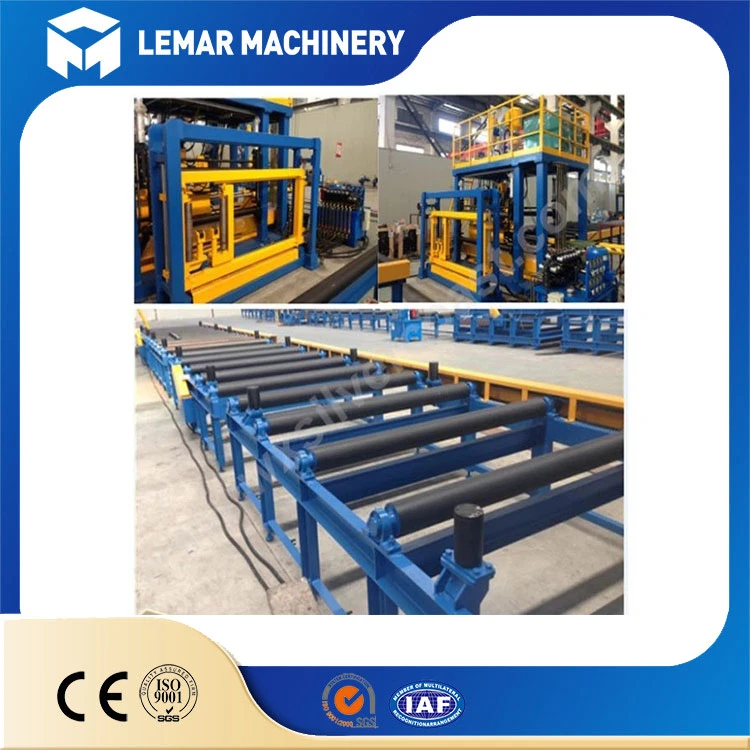
The control system typically consists of a programmable logic controller (PLC) and a human-machine interface (HMI). The PLC is a computerized device that controls the operation of the machine based on a set of pre-programmed instructions. The HMI is a touchscreen or other input device that allows the operator to interact with the machine and monitor its operation.
Applications of Double 90 Degree Flip Machines
Double 90 Degree Flip Machines are used in a wide range of industries, including manufacturing, automotive, aerospace, and construction. Some common applications of these machines include:
- Welding: Double 90 Degree Flip Machines are often used in welding applications to reorient workpieces for welding on multiple sides. This allows for more efficient and accurate welding, as the welder can access all sides of the workpiece without having to manually reposition it.
- Machining: In machining applications, Double 90 Degree Flip Machines can be used to reorient workpieces for machining on multiple sides. This can improve the accuracy and efficiency of the machining process, as the machine can access all sides of the workpiece without having to manually reposition it.
- Assembly: Double 90 Degree Flip Machines can also be used in assembly applications to reorient workpieces for assembly on multiple sides. This can improve the efficiency and accuracy of the assembly process, as the assembler can access all sides of the workpiece without having to manually reposition it.
Related Equipment
In addition to Double 90 Degree Flip Machines, there are several other types of equipment that are commonly used in manufacturing processes. Some of these related equipment include:
- Horizontal Rear Welding Machine: This type of machine is used for welding the rear of H beams. It is designed to provide high-quality welds and can be used in a variety of manufacturing applications.
- H beam End assembly machine: This machine is used for assembling the ends of H beams. It is designed to provide accurate and efficient assembly, and it can be used in a variety of manufacturing applications.
- Horizontal H Beam Welding Machine: This type of machine is used for welding the front of H beams. It is designed to provide high-quality welds and can be used in a variety of manufacturing applications.
Contact Us for Purchase and Consultation
If you are interested in purchasing a Double 90 Degree Flip Machine or any of the related equipment mentioned above, please feel free to contact us. Our team of experts is available to answer your questions and provide you with more information about our products. We can also help you determine the best equipment for your specific needs and provide you with a quote.
References
- Smith, J. (2020). Manufacturing Processes and Equipment. New York: McGraw-Hill.
- Jones, A. (2019). Welding Technology. London: Elsevier.
- Brown, C. (2018). Machining and Assembly Techniques. Chicago: Wiley.